At Mobilates we embrace everyone’s individuality and provide a person-centred approach to exercise activities. Below you will find details about Multiple Sclerosis (MS) a condition that some of our members live with. You’ll find information about the condition alongside top tips on exercising whilst staying safe, supported, and adapting movement to suit your individual needs.
Our Moving with Confidence blog series explores how gentle, adaptable movement can support people in a way that feels safe, achievable, and person-centred.
This latest blog focuses on Multiple Sclerosis (MS) and how movement can be adapted to support fluctuating symptoms such as fatigue, balance changes, muscle weakness, and coordination difficulties.
Definition: What is Multiple Sclerosis?
Multiple Sclerosis (MS) is a long-term condition that affects the central nervous system, including the brain and spinal cord. Information from the NHS describes MS as an autoimmune condition where the immune system mistakenly attacks the protective covering of nerves (myelin), affecting how messages travel between the brain and the body.
The MS Society explains that MS is often an “invisible condition”, as symptoms are not always visible and can vary widely between individuals.
Symptoms may fluctuate over time, with periods where they are more active and other times where they are more stable.
Common symptoms can include fatigue, muscle weakness, balance and coordination difficulties, stiffness or spasms, sensory changes, pain, and challenges with concentration or processing information.
Because MS affects everyone differently, there is no single pattern of symptoms or progression.
What Causes MS?
Multiple Sclerosis (MS) is an autoimmune condition, meaning the immune system mistakenly attacks the body’s own tissues. In MS, the immune system targets the protective covering around nerves (myelin) in the brain and spinal cord, which can affect how messages are transmitted between the brain and the body
The exact cause is not fully understood, but it is thought to involve a combination of genetic and environmental factors, as outlined by the NHS and the MS Society.
MS is more commonly diagnosed in younger adults and is more prevalent in women, although it can affect anyone.
There is currently no cure, but many people manage symptoms through medical treatment, pacing strategies, and supportive movement approaches.
Symptoms can vary day to day and may be influenced by fatigue, stress, heat, illness, and overexertion.
Focus
Living with MS can affect movement in different ways, particularly in relation to fatigue, balance, coordination, and muscle control. Some days movement may feel easier, while on others it may feel more challenging or unpredictable.
Some people also find that movement, stiffness, and balance can feel more difficult in the morning and may gradually improve as the body becomes more active. This can make timing and class selection an important part of managing energy and comfort.
Because of this variability, a flexible approach to movement is essential.
In Mobilates, the focus is on choice, pacing, and working with the body rather than against it. Movement can be adapted depending on energy levels, symptoms, and comfort on any given day.
Exercises may be completed lying down, seated, or standing depending on what feels most supportive.
Movement does not need to be intense to be beneficial. Gentle, controlled movement can support mobility, circulation, posture, and confidence.
The aim is to support function, comfort, and independence rather than pushing through fatigue.
Exercise Tips
When taking part in movement with MS, it can be helpful to focus on a few key principles:
Choose exercises based on how your body feels on the day
Adapt position (lying, seated, standing) as needed
Move at a controlled and comfortable pace
Use support such as chairs, walls, or equipment
Reduce range of movement if needed
Take breaks whenever required
Some days symptoms may feel more noticeable than others, and adapting in the moment is an important part of supporting movement.
There is no expectation to complete every exercise or keep pace with others.
Movement should always feel individual and supportive.
Exercises to Try
These Pilates-based exercises support gentle strength, mobility, coordination, and control. All can be adapted depending on energy levels, balance, and comfort.
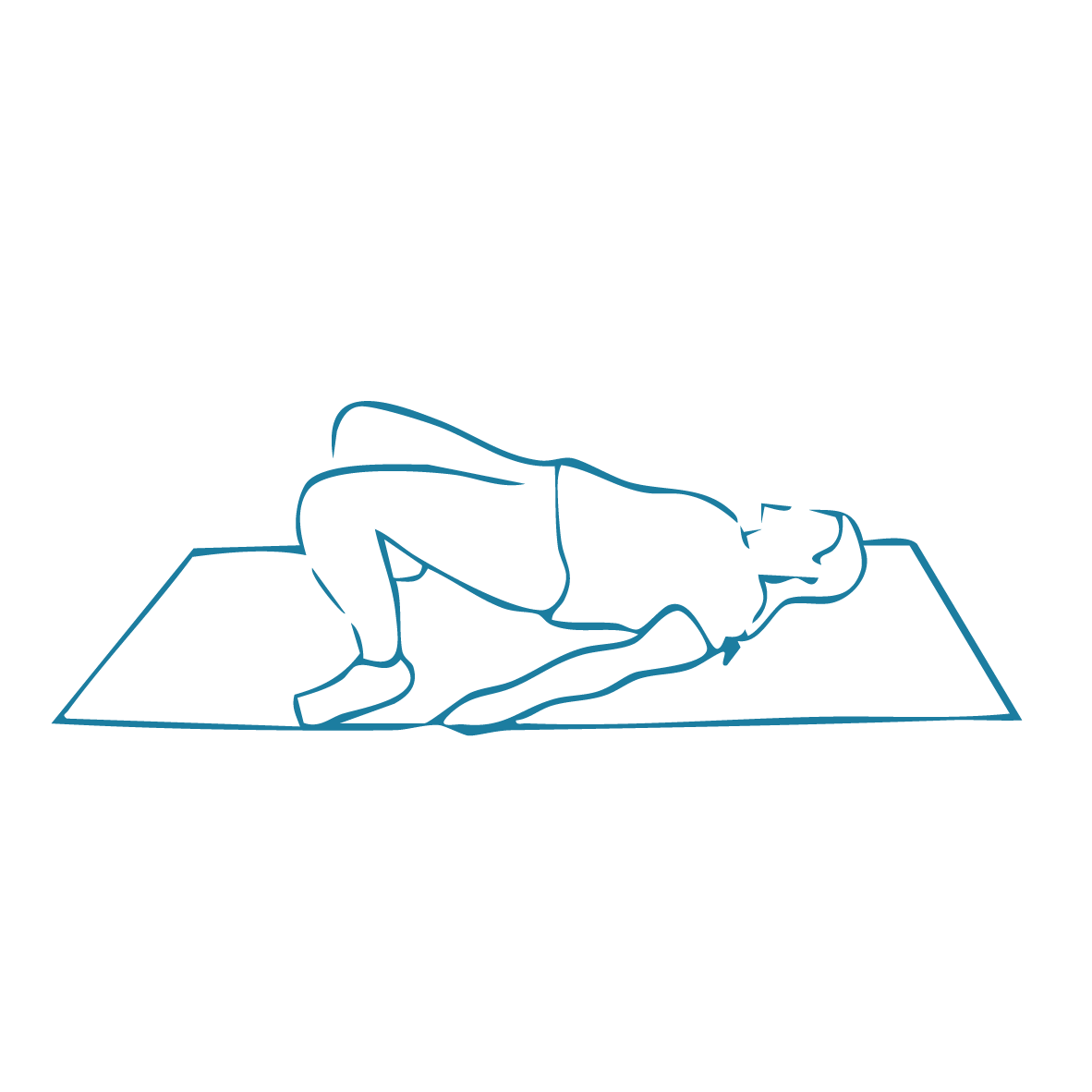
1. Bridging
Strengthen the glutes, legs, and support postural stability.
Lie on your back with knees bent and feet hip-width apart.
Gently lift the hips a small amount off the floor.
Slowly lower back down with control.
Keep the movement small and steady.
2. Modified Hundred
Support breathing, circulation, and gentle core activation.
Lie on your back with knees bent and feet on the floor, or remain seated.
Gently move the arms in small controlled pulses.
Coordinate movement with steady breathing.
Legs can stay grounded or be lifted one at a time if appropriate.
3. Dying Bug
Improve coordination, stability, and body awareness.
Lie on your back with knees bent or in a tabletop position if comfortable.
Slowly move one arm or one leg at a time.
Return to centre before changing sides.
Reduce the movement to one limb only if needed.
4. Leg Circles
Support hip mobility and control.
Lie on your back or remain seated with support.
Gently move one leg in small controlled circles.
Keep the pelvis stable and movement smooth.
Circles should remain small and comfortable.
5. Seated Spine Twist
Support spinal mobility, posture, and gentle coordination.
Sit tall in a chair with feet flat on the floor.
Place hands across the chest or rest them on the shoulders.
Gently rotate the upper body to one side, keeping the movement small and controlled.
Return to centre, then repeat on the other side.
Keep hips facing forward and avoid forcing the range of movement.
This can be done with or without breath coordination depending on comfort.
6. Cat-Cow
Promote spinal flexibility and ease tension.
Perform on hands and knees or in a seated position.
Gently round the spine, then lengthen and open the chest.
Coordinate with slow breathing.
A seated version with hands on thighs is a good alternative.
7. Supported Weight Shift / Gentle Stepping
Support balance, coordination, and confidence in movement.
Hold onto a chair, wall, or stable support if needed.
Gently shift weight from side to side or take small controlled steps.
Keep movement slow and steady.
A small Pilates ball placed between the legs can sometimes help with awareness and stability in standing work. This is an optional adaptation and may not suit everyone.
8. Gentle Circulation Movements
Encourage circulation and ease stiffness.
Move hands, wrists, feet, and ankles gently.
Try ankle pumps, wrist circles, finger opening and closing, or gentle seated marching.
Keep movements relaxed and unforced.
Gentle reminder
You can rest at any time, reduce range of movement, or choose not to participate in certain exercises.
Every movement choice is valid, and some days rest may be the most supportive option.
Final Thought
Living with MS can bring variability in how the body feels and responds to movement, making flexibility and self-awareness important.
Movement does not need to be intense or consistent to be beneficial. Small, adapted movement can support comfort, confidence, and connection with the body.
At Mobilates, we recognise that every person’s experience is different. Our focus is on providing options that allow movement to feel safe, achievable, and supportive on any given day.
There is no “correct” way to move – only what works for you in that moment.
Member Experiences
Everyone experiences MS differently, and movement preferences and support needs can vary from person to person.
The following comments have been shared by Mobilates members living with MS and reflect individual experiences of movement, adaptation, and support within classes.
Member Comment – Mandi
I have been coming to Mobilates now right back from the very beginning of Leanne’s classes. I was very reluctant to join at first as every exercise class I’d ever attended previously had made me feel that I had to hide at the back, as I couldn’t keep up, or even do most of the exercises.
I’ve had MS since my twenties, so for 40 years plus, and it affects my balance mostly, but I now also have significant foot issues and joint problems.
These Mobilates classes have been a lifesaver for me, both mentally and physically. With the help of Leanne’s amazing knowledge of medical issues and human physiology, and her empathy and gentle approach, it’s given me the confidence to continue with adapted exercises, either seated or at a pace that suits me.
The classes have helped with my balance, reducing fatigue, and improving my joint mobility. It’s keeping me moving.
I love the way each person is treated as an individual and we can all exercise at our own levels.
I really miss Leanne, but before she left she worked hard to find the right person to replace her — and now we have the wonderful Sophie, who is continuing brilliantly in Leanne’s footsteps.
I have even finally met someone else with MS, which has been a great comfort to me, allowing me to share experiences for the first time.
I can’t imagine I’d ever stop coming to Mobilates now, and I’ve made some lovely friends.
Member Comment – Izzy
I have lived with MS for 28 years (since my first child was 1 year old). My mobility is severely impaired – I use crutches or a wheelchair indoors and a scooter outdoors.
I started seated Mobilates when Leanne set it up in Paddock Wood and have continued with this weekly class since Sophie took it on.
Mentally, the relief of being able to exercise in a class without feeling “less than” has been a huge boost to my quality of life.
Physically, I have built up much greater core strength which positively impacts my balance, flexibility, and strength.
Having a teacher who understands my limitations and allows for them, whilst encouraging me to push myself, is liberating. Plus we are a lovely social group who can laugh at ourselves.
Further Information and Guidance
Already a member? Book your online Mobilates classes here.
Not yet a member? Then you can book your free online Mobilates trial here.
For more Information visit:
These organisations provide trusted information, support, and resources about Multiple Sclerosis (MS), including symptoms, management strategies, and living well with the condition.
Information, support, and resources for living with MS
MS Society – Offers guidance, lived experience support, and practical advice for people affected by MS
NHS – Provides a medical overview of MS, including symptoms, diagnosis, and treatment
Multiple Sclerosis Trust – Offers detailed information, education resources, and support for managing MS
You can read other blogs in this series by clicking on the links below:
Moving with Confidence – Pilates for Chronic Health Conditions – Osteoporosis
Moving with Confidence – Pilates for Chronic Health Conditions: Fibromyalgia
Supporting Mental Health Through Movement – Understanding Psychosis
Mobilates CIC provides inclusive, adapted exercise for people living with long term health conditions, chronic pain, fatigue and disability.
We create safe, welcoming spaces to move, connect and build confidence in what your body CAN do, whether you join a class in person, online, or from your bed. We’re led by lived experience and powered by community. Together, we’re redefining what movement can look like.
💗 Join Da Mob: www.mobilates.com
📧 Get updates: Subscribe to our newsletter for gentle inspiration, community stories, and upcoming events.