At Mobilates we embrace everyone's individuality and provide a person-centred approach to exercise activities. Below you will find details about Functional Neurological Disorders (FND) – a condition that some of our members live with. You’ll find some information about the condition alongside some top tips on exercising whilst staying safe and supported.
Definition: What is Functional Neurological Disorder (FND)?
Functional Neurological Disorder (FND) is a condition that affects how the brain and body send and receive signals. In FND, the nervous system structure looks healthy on scans, but the “wiring” or communication doesn’t always work as it should. This can cause a wide range of very real symptoms.
When FND affects movement, people may experience:
Weakness or paralysis in a limb
Tremors, jerks, or shaking
Difficulty walking, including dragging a leg or freezing when moving
Loss of balance or coordination
Collapsing episodes or changes in muscle control
These symptoms can vary day to day and may improve or worsen depending on fatigue, stress, or illness.
What Causes FND?
FND does not have one single cause. It’s thought to arise when the brain has trouble controlling movement and attention, even though the nerves and muscles themselves are healthy.
Factors that may contribute to FND include:
A physical event such as an injury, illness, or surgery
High levels of stress, or previous trauma (though FND can develop without these)
Other conditions such as migraines, chronic pain, or fatigue
Difficulties in the way the brain processes movement and sensation
Co-existing mental health conditions, which can influence how the brain and body interact
It’s important to stress that FND symptoms are genuine and not “made up.” With the right support, management, and practice, many people see significant improvements.
Focus
For people living with FND, movement and exercise are not just about physical fitness but also about retraining the brain to body connection. Pilates can be especially helpful because it encourages slow, mindful, and controlled movement. This helps you bring awareness to how your body is moving and can gradually support more confidence in everyday activities.
Some key focuses in Pilates for FND include:
Attention and awareness – moving with focus can help “retrain” movement patterns.
Balance and coordination – gentle practice supports steadier movement.
Muscle strengthening – building strength gives the body more support, especially if movement patterns are inconsistent.
Breath and relaxation – calming the nervous system can reduce symptom flare-ups.
Exercise Tips
At Mobilates we try to support you to become more aware of your body and what it can and cannot do as well as what feels safe. Every teacher will provide adaptations where required to ensure you get the most out of every class.
Below are some examples of things that you can do to make exercise better for your body and allow you to feel the full benefits of your class:
Move slowly and with focus, paying attention to how your body responds.
Use grounding techniques (like noticing your feet pressing into the mat) to improve stability.
Practice smaller ranges of motion if larger ones feel overwhelming.
Try seated or supported variations if balance is a concern.
Breath work and relaxation can help calm the nervous system and reduce symptom intensity.
Props such as blocks, balls, bands, and cushions can provide extra support.
Rest and pacing are vital – take breaks when needed and avoid over-fatiguing.
Focus on posture and alignment to improve coordination and reduce strain.
Adapting some Simple Exercises
Some Pilates exercises may need to be adapted to suit your individual needs. Your teacher will always support you to find the right version. For example:
Leg slides, heel taps, and toe taps – gentle options for hip and knee mobility.
Side-lying leg lifts – can strengthen glutes and hips without overloading balance.
Spine mobility – cat-cow movements are helpful, but these can also be done seated or with a ball for more control.
Modified forward stretches – bending from the hips with support, rather than curving the spine, can feel steadier.
Postural work – shoulder blade retraction and scapular stability help improve awareness and upright posture.
Chair-based exercises – excellent if floor work feels difficult or tiring.
The goal is always to work within a safe range that feels supportive, not stressful.
Final Thought
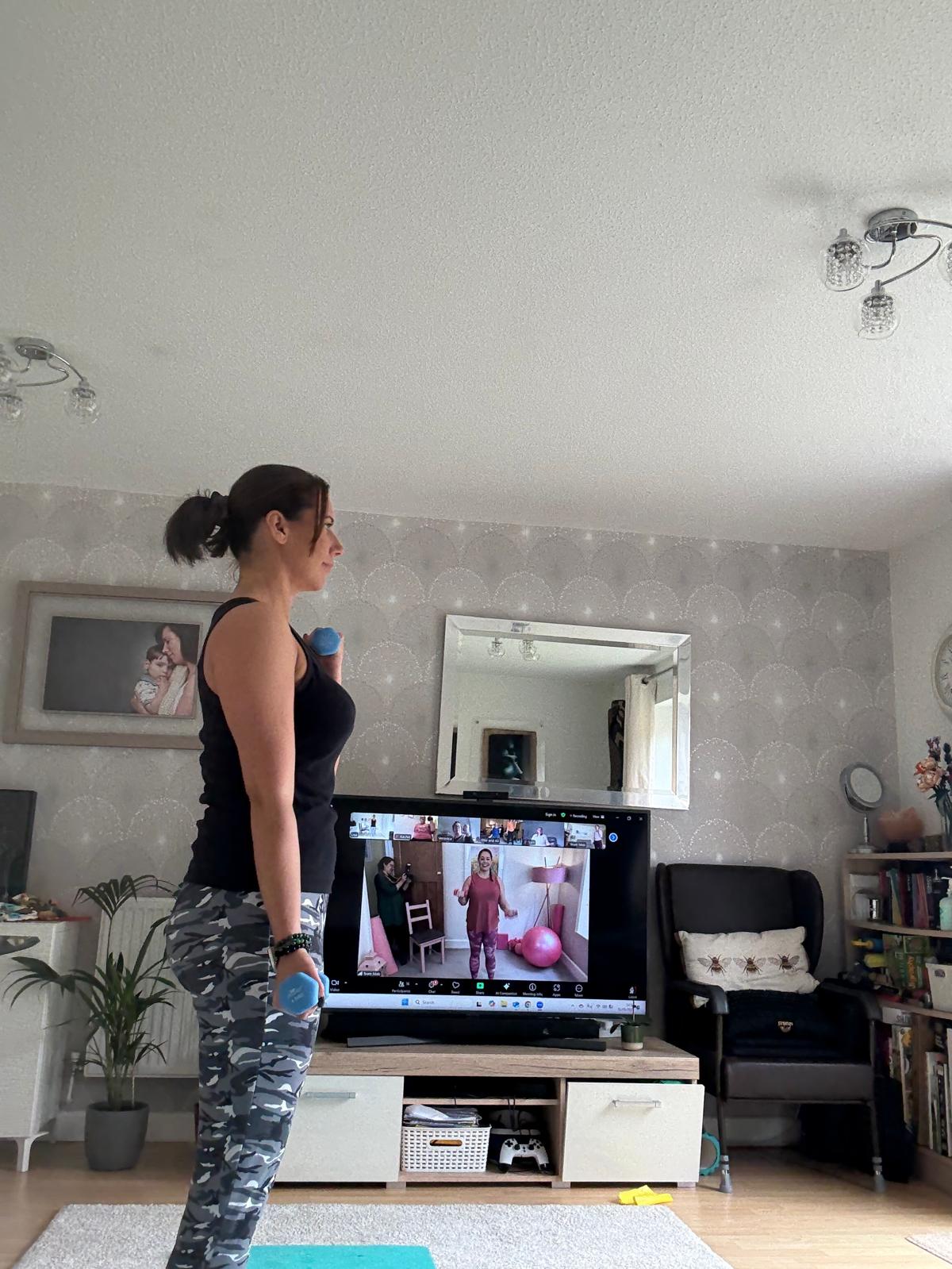
Pilates can be a powerful tool for those living with FND. By focusing on slow, mindful, and supported movement, it can help rebuild confidence, strengthen the body, and promote a sense of calm. Remember to move in a smooth, controlled way during and between all Pilates exercises, and stay within your comfort range.
Mobilates run specialist classes that focus on strength, stability, and balance, helping you feel more grounded and confident in your movement. These sessions are particularly beneficial for those managing conditions like FND, but they can also support anyone wanting to improve awareness, resilience, and control in their body.
Member Comments
Living with FND can be challenging, but you’re not alone. Through Pilates, many in our community have found encouragement, connection, and hope. Here they share their experiences in their own words.
"When I was first diagnosed with FND I felt really unsure about what movements were safe and I often avoided exercise because I was scared of making my symptoms worse. Joining Mobilates has completely changed that. The gentle and supportive approach in each class has helped me to reconnect with my body and feel more confident in my movement. I’ve learned how to pace myself, adapt exercises, and focus on my posture and breathing. Over time, this has helped me manage my symptoms better and feel stronger both physically and mentally. I now look forward to exercise rather than fearing it, and I can see the difference it makes in my day-to-day life.”
"One of my biggest challenges with FND was balance – I felt unsteady and anxious about falling. The Mobilates sessions have helped me practice balance in a safe way, with lots of support and encouragement. Slowly, I’ve built up strength and confidence, and now I notice I’m steadier on my feet in everyday life. It feels like I’ve got some control back, which is something I didn’t think was possible.”
"For me, the relaxation and breathing parts of classes have been just as important as the movement. My symptoms can flare when my nervous system feels overwhelmed, and learning how to calm my body through breath and gentle exercise has been a huge help. The classes give me both physical strength and mental space, and I always finish feeling more grounded and positive.”
Further Information and Guidance
Already a member? Book your online Mobilates classes here.
Not yet a member? Then you can book your free online Mobilates trial here.
For more Information visit:
These organisations have factsheets and resources about FND, including movement symptoms, coping strategies, and recovery stories.
Balance & Functional Movement Disorders
Managing Functional Movement Disorders – Techniques & Self-Care
You can read other blogs in this series by clicking on the links below:
Moving with Confidence – Pilates for Chronic Health Conditions – Osteoporosis
Moving with Confidence – Pilates for Chronic Health Conditions: Fibromyalgia
Supporting Mental Health Through Movement – Understanding Psychosis
Mobilates CIC provides online and in-person inclusive exercises classes for people in the UK. Classes centre around supporting people with mobility issues, chronic pain, disabilities and long-term health conditions.