Part 1
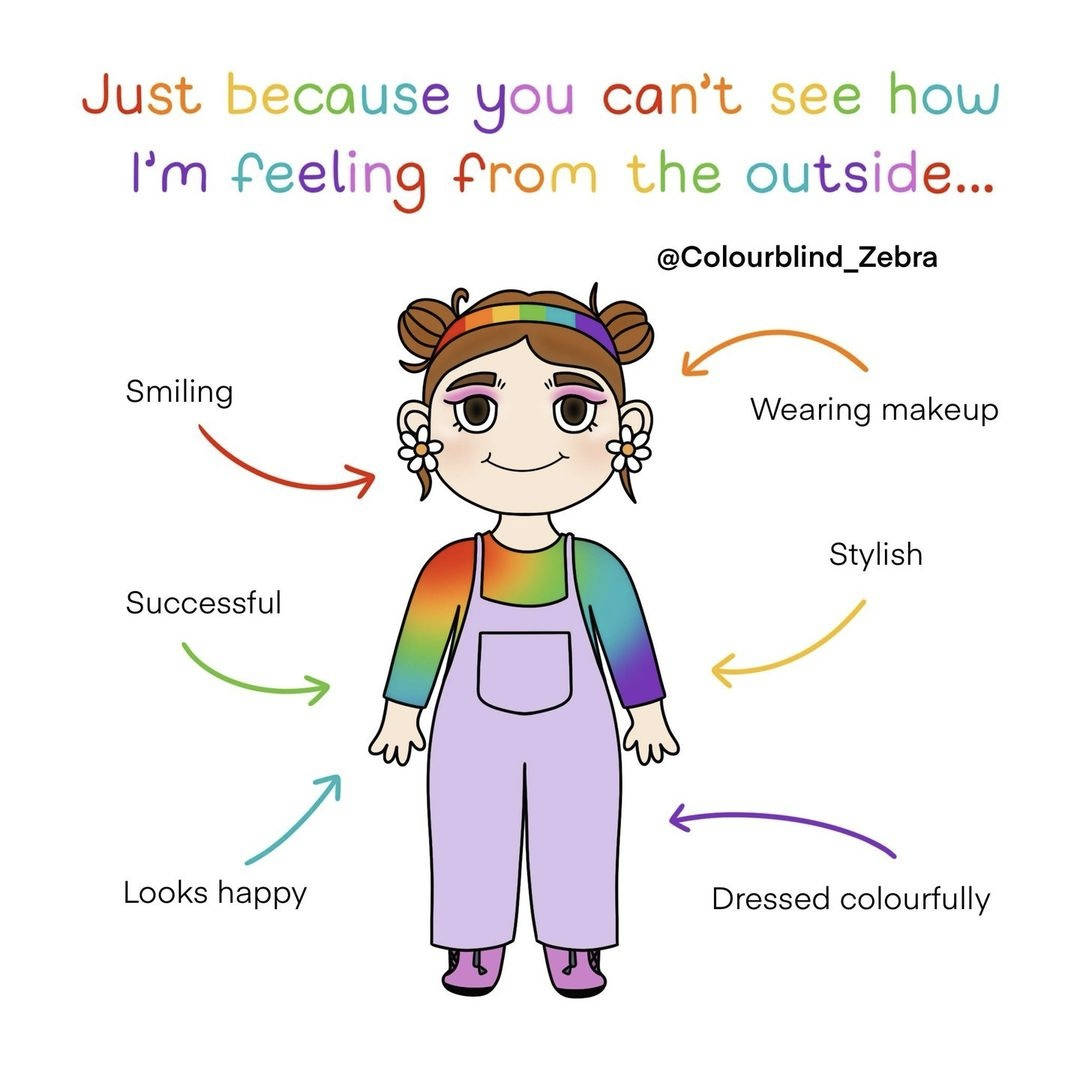
(Image from @colourblind_Zebra)
The Truth About Life With Multiple Health Conditions
Living with multiple health conditions is a challenging situation to find yourself in. When you see different medical professionals for differing conditions and from different specialities it can seem like all your time is spent juggling symptoms – organising medical notes and preparing for appointments.
Chronic Pain Is A Full Time Job
Pain, medications, treatments and discomfort – they're like having a full-time job. Many people expereince the daily chores like physiotherapy, medication preparation, hospital visits and balancing mental and physical health. Staying connected can be difficult as multiple conditions can isolate people from the typical work/life rhythms that able blodiedpeople experience. Being a part of the community, having a purpose, resting, exercising, eating and hydrating properly, all things that need careful consideration.
Symptoms & Mental Health
For any people symptoms change over time, sometimes they get better, other times they get worse. Working out what condition is causing which symptoms can be problematic and stressful. Many people experience multiple changes to medication, and not knowing what kind of day they have ahead of them regarding pain or mobility issues.
On top of that, many people feel an obligation a need to maintain some normality in everyday life.
It's difficult to seek glimmers of hope and happiness when symptoms are unpredictable.
Finding Glimmers
We encourage our Mobilates Members to add something fun to their day wherever possible. It could be a walk, a trip to the shops, a drink at a local cafe or a visit to a place of nature. Some light in the darkness to support mental health and increase the motivation to get up each day.
Staying locked up inside can feel like the easiest thing to do, sometimes feels like the right thing to do.
The key challenges faced for people living with multiple health conditions
Understanding – or lack thereof
Doctor letters not appearing on your file
Mental health ‘hidden’ from your consultants and GP
Organisation – fatigue/time/planning
Multiple health locations – hospitals may be in different areas
No linking between all departments/specialities concerned with the treatment
Awaiting surgery and its impact on other conditions
Amount of appointments – the energy used and time taken up
Lack of communication between medical professionals involved in the care
The need to be an expert on all conditions managed
Top 10 tips for those with LTHCs
Listen to your body
Self-care is Important
Establish a good support network
Understand your conditions
Be aware of how conditions interlink
Inform family and friends
Organise medical records in a folder
Plan ahead – control as much as you can
Have someone attend appointments with you
Write down questions and answers for those involved in your medical care
Organising your medical notes into a folder
This will help you to track your medical conditions – provide a good reference for yourself and anyone involved in your care – and ensure you have the answers to any questions GPs, nurses and doctors from different specialities may wish to ask you.
Your main medical folder should include:
A section for each speciality of medicine that you have a condition for
Information about your most serious condition and how to manage it should be prominent
A list of medication taken in each section – ideally a copy of your repeat prescription
Your most recent letters from the hospital in date order
Appointment letters that you can refer to for your next appointment
At the rear of your folder it is helpful to have:
A full list of medications and when taken, including the dosage and why taken
List of appointments by date/month/year
Details of any health/travel insurance you may have in case of an emergency
Details of vaccines you have had
Preparing for an appointment
It may seem like hard work and take time but preparation for an appointment will ensure you get as much from it as possible. Over time preparation will become easier and like a ‘routine’. Things I like to include are:
Main symptoms experienced
Concerns and questions
General updates from other appointments
Medication changes
Cross over problems
Anything that is affecting my conditions – for example, mental health or stressful situations
My way of organising this is to pop a few notes for each of the above onto Post-it notes and then stick them onto a piece of A4 paper which can then be put into the relevant section of my folder.
In this way, I can ‘reuse’ certain lists for other appointments and I have space to write down answers to my questions either during or straight after my appointment.
Top 10 things that help me get through the day
Self-Care
Nature
Movement
Healthy food
Regular medication times
Good hydration
Relaxation
Visualisation
Connectivity
Getting good quality sleep
Great resources to enable family and friends to understand how you feel
Colourblind Zebra has a great blog that has 12 things not to say to people who have chronic conditions many of which can be invisible. They set out the challenges and demands of everyday living and the impact that these statements can have on us. The main culprits are:
I understand your fatigue
But you could do that yesterday
Everyone gets sick
Just try to push through
It must be nice to stay home all day and not have to go to work or school
At least you don’t have…
But You Don’t Look Sick is another great reference that helps people understand what it is really like to live with chronic conditions. The Spoon Theory written by Christine Miserandino was created as a way to express the choices and problems that those with chronic conditions face. Using spoons as an example to represent energy and the number of daily tasks possible and deciding how to use them each day.
Subtle ways to communicate how you feel/express that something is wrong
Stickman Communications created by Hannah Ensor is a method of communicating and aiding understanding through the use of stickman drawings and simple descriptions. Her range of products includes laminated cards, Status Square Clips and new to the range The Symptom Wristband which is double-sided – has different wording on each side which tells people discreetly at any moment that either – now is not too bad or now is tough.
Hannah Ensor said (on one of her cards) “When my brain fog is bad, I love being able to give friends, family, and colleagues the heads up without having to talk about it. Wearing this on a lanyard, or putting it next to me does the trick nicely”.
The Sunflower is a global inclusive network that supports those with invisible disabilities. The flower represents a person's condition(s) discreetly. Organisations sign up to the scheme and employees recognise the emblem and are immediately alerted to the fact that additional help may be required. You can purchase a range of Sunflower products directly from the shop which includes badges, stickers, lanyards and face coverings.
The key to supporting those with long-term health conditions…
Don’t make the chronically unwell feel more isolated and stigmatised than they already do
Accept them into the community
Give them a chance to make some progress without judgment – resentment or fear
Acceptance is crucial – understanding and support key
Having multiple health conditions can affect your ability to work and limit what you can do in your social life. Things like pain, low mood, mobility, financial problems, and fatigue can all be made worse with multiple conditions. It’s a real challenge and should not be underestimated.
Useful Links
12 Things Not to Say to People with a Chronic or Invisible Illness
The Spoon Theory by Christine Miserandino
Stickman Communications — Symptom Wristband
Stickman Communications — Status Squares
Mobilates CIC provides online and in-person inclusive exercises classes for people in the UK. Classes centre around supporting people with mobility issues, chronic pain, disabilities and long-term health conditions.