At Mobilates we embrace everyone's individuality and provide a person-centred approach to exercise activities. Below you will find details about Osteoporosis – this is a condition that many of our members live with – you’ll find some information about the condition alongside some top tips on exercising whilst staying safe and supported.
Definition: What is Osteoporosis?
Osteoporosis is a health condition that weakens bones, making them fragile and more likely to break. It may develop slowly over several years but there could be periods of time when it accelerates more quickly. For women this is particularly noticeable during the menopause.
It is often only diagnosed when a fall or sudden impact causes a bone to break (fracture). The most common injuries in people with osteoporosis are: broken wrist, broken hip (hip fracture) and broken spinal bones (vertebrae).
The stage before osteoporosis is called osteopenia. This is when a bone density scan shows you have lower bone density than the average for your age, but not low enough to be classed as osteoporosis.
Osteopenia does not always lead to osteoporosis. It depends on many factors.
If you have osteopenia, there are steps you can take to keep your bones healthy and reduce your risk of developing osteoporosis.
What Causes Osteoporosis & Who Is At Risk?
Osteoporosis causes bones to become weaker and more fragile. Some people are more at risk than others.
Bones are thickest and strongest in your early adult life until your late 20s. You gradually start losing bone from around the age of 35.
This happens to everyone, but some people develop osteoporosis and lose bone much faster than normal. This means they're at greater risk of a fracture.
Many other factors can also increase the risk of developing osteoporosis, including:
taking high-dose steroid tablets for more than 3 months
other medical conditions – such as inflammatory conditions, hormone-related conditions, or malabsorption problems
a family history of osteoporosis – particularly a hip fracture in a parent
long-term use of certain medicines that can affect bone strength or hormone levels, such as anti-oestrogen tablets that many women take after breast cancer
having a low body mass index (BMI)
not exercising regularly
Focus
For exercise to be most effective at keeping bones strong you need to combine weight-bearing exercise with impact, balance work and muscle strengthening exercise.
Weight-bearing impact exercise involves being on your feet and adding an extra force or controlled jolt through your bones.
Variety is good for bones, which you can achieve with different movements, directions and speeds.
Balance is crucial in order to avoid falls and therefore reduce your risk of fractures.
Exercise Tips
At Mobilates we help you become more aware of your body and what it can and cannot do as well as what is safe. Every teacher will provide adaptations where required to ensure you get the most out of every class. Below are some examples of things that you can do to make exercise better for your body and allow you to feel the full benefits of your class:
During Pilates try to have an extension bias: lengthening your lower back and tilting the tailbone slightly under to create more space and reduce pain.
Extension in the thoracic spine is also important (As shown in the image below).
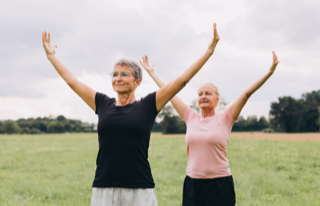
Two ladies standing one in front of the other, standing tall with their arms lifted to shoulder height and out to the side. Chests are lifted, shoulder down and looking forwards but slightly upwards. The hip hinge position (as shown in the picture below) is crucial for osteoporosis/osteopenia and spinal fusion.
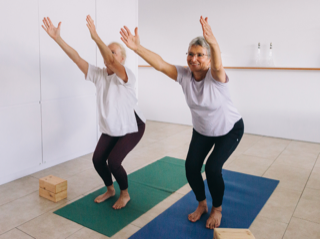
Two ladies standing side by side on pilates mats. Both have their knees bent, sending their bottoms backwards and bending at the hips with arms straight and lifted up by their ears. When doing a Roll Down, stand with your back against a wall, your feet slightly away from the wall and your hands resting on your thighs. As you bend forward keep your hands on your thighs to support your upper body as you move. Move forward only as far as remains comfortable with your lower body still resting against the wall.
Leg slides, heel taps, and toe taps are great for gentle hip and knee mobility.
Side-lying leg lifts help to strengthen glutes and hips.
Spine mobility can be improved through the cat, cow movement which is an exercise that is used to mobilise your spine and hips. (Click this factsheet link for details)
Doing the cat, cow movement sitting and using a ball to lean on can be helpful to reduce the range of movement.
Modify forward spine stretch by bending your knees and bending forward from the hips (hip hinge) keeping your back straight instead of curving your spine, reaching as far as is comfortable.
Postural work such and shoulder blade retraction and scapular stability are important.
Keep the back straight when bending forward or sideways with weights or when lifting weights above your head, keeping ranges of motion small.
Try chair-based exercises if floor work is difficult.
Use props (blocks, balls, bands, towels and cushions) for support.
Breath work and relaxation will support nervous system regulation.
Focus on joint alignment and posture.
Take pacing and rest periods when needed.
Adapting some Simple Exercises
You can find some more information about how to adapt simple pilates exercises by reading The Royal Osteoporosis Society’s FactSheet: Pilates exercises – modifications with osteoporosis, which focuses on exercises specifically aimed at supporting your back.
Final Thought
Pilates can be a powerful tool for those with Osteoporosis. Remember to move in a smooth, controlled way during and between all Pilates exercises, and stay within your comfort range.
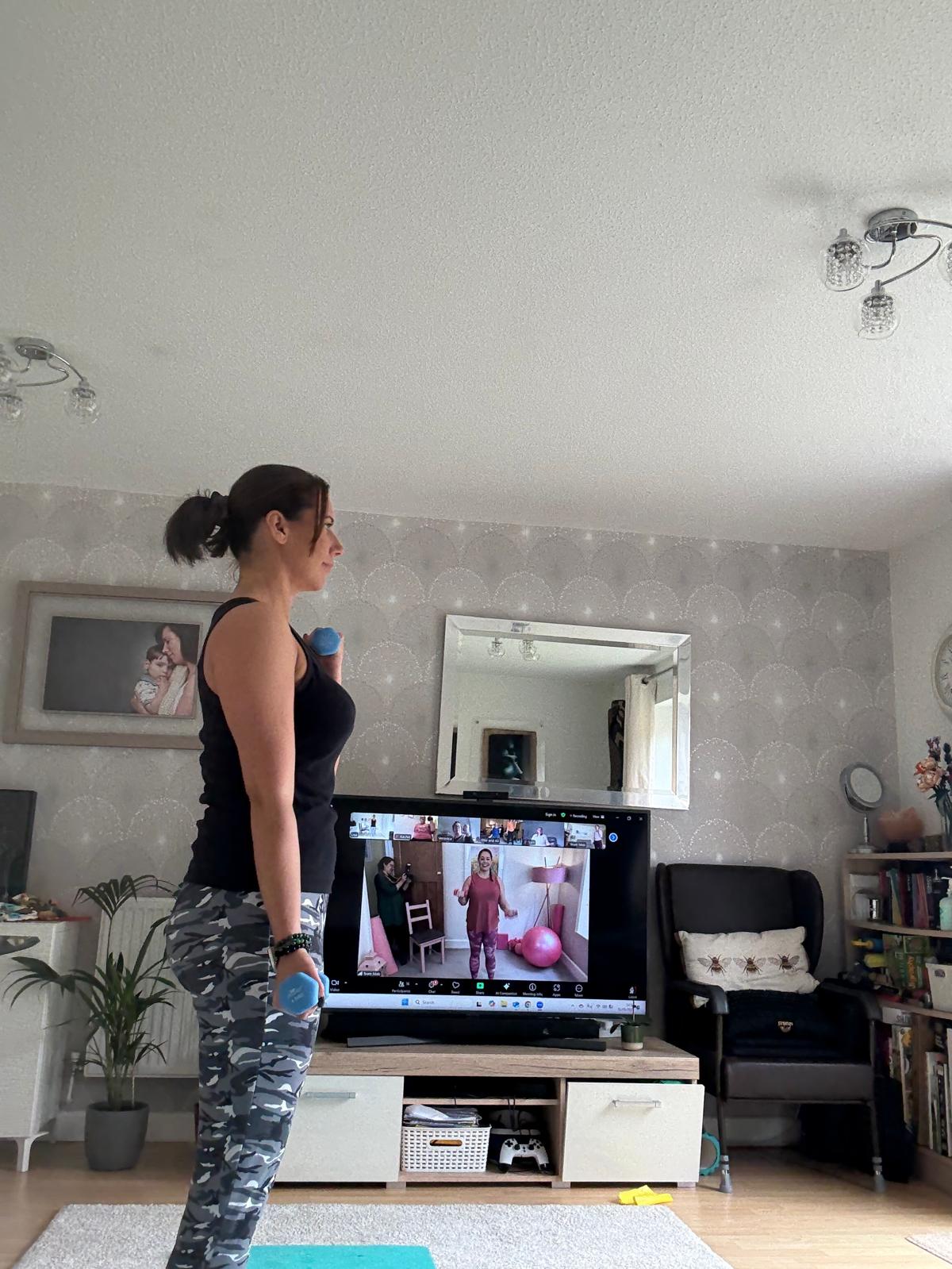
Mobilates run special ‘Boost Your Bones’ classes once a month. These focused classes led by Kerry are strength based using different ways to use resistance e.g. weights, bands, household items and your body weight, to strengthen your muscles and bones as well as focusing on balance and stability.
This class is ideal if you want to improve your balance and grow stronger, especially if you have been diagnosed with osteopenia or osteoporosis. But it's also great for those whose risk factors are greater.
Member Comment
Coming soon…….
Further Information and Guidance
Already a member? Book your online Mobilates classes here.
Not yet a member? Then you can book your free online Mobilates trial here.
For more Information visit: The Royal Osteoarthritis Society
The Royal Osteoporosis Society has a number of factsheets about exercise. The links are below:
About exercise for osteoporosis
Exercises to promote bone and muscle strength
Exercises to improve balance and muscle strength
Exercises for back pain after spinal fractures
Exercises to help with posture
Pilates modifications with osteoporosis
Bending forward with osteoporosis
You can read other blogs in this series by clicking on the links below:
Moving with Confidence – Pilates for Chronic Health Conditions – Osteoporosis
Moving with Confidence – Pilates for Chronic Health Conditions: Fibromyalgia
Supporting Mental Health Through Movement – Understanding Psychosis
Mobilates CIC provides online and in-person inclusive exercises classes for people in the UK. Classes centre around supporting people with mobility issues, chronic pain, disabilities and long-term health conditions.